Skip to thread
TwitterShots
1 / 13
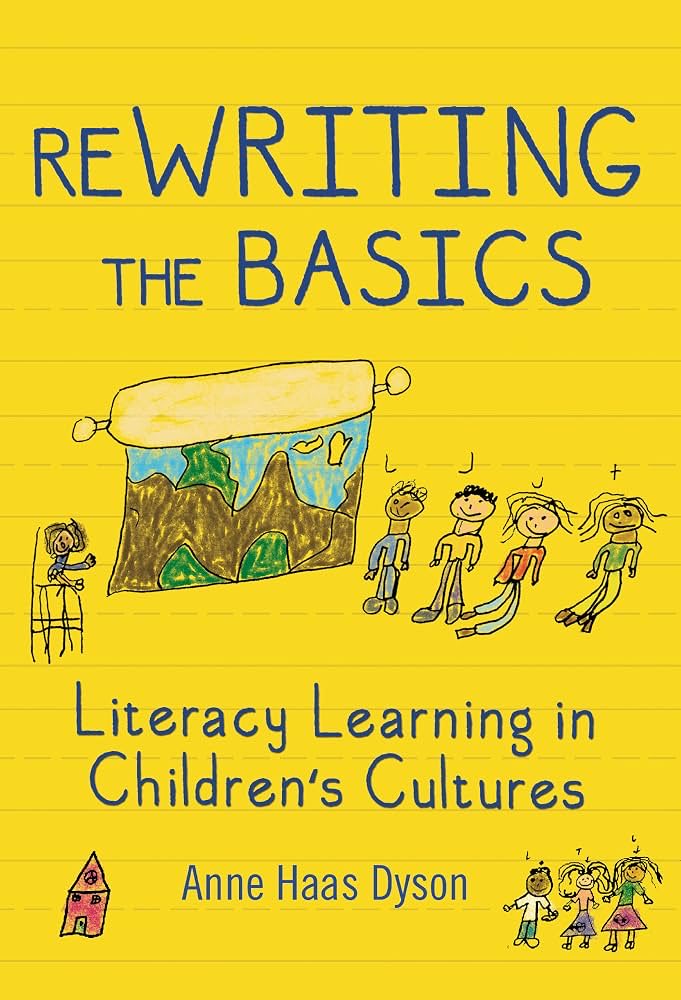
1/ "Some children don't even know what a noun or a verb is!" You'll hear this. It’s usually followed by a call for “going back to basics” and more grammar drills. However, it’s all a big muddle. 🧵… See Dyson:
Tweet image 1
2 / 13
2/ My daughter Isla-Scout is 15 months old. Her first words include: dog, hat, banana, Grandad, Tigger, go, this, no, again, hi, bye, oh dear. Things, people, an action, pointing, negation, recurrence, social routines. She's already sorting the world into words.
3 / 13
3/ To be fair, researchers debate whether a toddler's single words are "nouns" and "verbs" in the adult sense. "Ball" might mean "give me the ball” or “Look Daddy, a ball!”.
4 / 13
4/ By around two, children use sentence structure to work out new words. In Naigles's experiments, toddlers heard a made-up verb in different contexts and looked at different scenes depending on the grammar. That takes a working sense of how verbs behave. pubmed.ncbi.nlm.nih.gov/2380274/
Children use syntax to learn verb meanings - PubMed

pubmed.ncbi.nlm.nih.gov

Children use syntax to learn verb meanings - PubMed

Verb learning is clearly a function of observation of real-world contingencies; however, it is argued that such observational information is insufficient to account fully for vocabulary acquisition....

5 / 13
5/ Then comes the over applying: goed, runned, mouses, sheeps. Nobody taught them those. Children are over-applying rules they worked out for themselves.
7 / 13
7/ By school age, children have a huge working grammar. They make plurals and past tenses, form questions and negatives, and use subordinate clauses. None of it depends on knowing the terms.
8 / 13
8/ So what does "doesn't know what a noun is" really mean? That a child can't name or spot one on a worksheet. That's a gap in their ‘structural linguistics’ knowledge, not in grammatical knowledge (using it).
9 / 13
9/ Mixing these up matters. Chn get treated as if they are idiots when they are anything but... Labelling words gets mistaken for grammatical knowledge. Andrews’ review finds little writing benefit from grammar taught as structural linguistics bera-journals.onlinelibrary.wiley.com/doi/abs/10.108…
British Educational Research Journal | BERA Journal | Wiley Online Library

bera-journals.onlinelibrary.wiley.com

British Educational Research Journal | BERA Journal | Wiley Online Library

This article reports on the results of two international systematic research reviews which focus on different aspects of teaching grammar to improve the quality and accuracy of 5–16-year-olds'...

10 / 13
10/ What does help? Myhill and colleagues found grammar taught in context, as choices writers make in their own texts, made a real difference. The use mattered most, not the terminology on its own. journals.indianapolis.iu.edu/index.php/teac…
11 / 13
11/ This isn't anti-terminology. Shared terms help us talk together. But the terms should name something children already do, not stand in for something they supposedly lack.
12 / 13
12/ Starting from deficit ("they don't even know what a noun is") gets children and grammar off on the wrong foot. Starting from expertise sets things up better: "you use nouns all the time; let's look at how you choose them."

Publish your own threads

Turn any X thread into a clean, shareable page like this one.

Get started

Published on TwitterShots · Thread by @WritingRocks_17

Content from X belongs to the original author.